

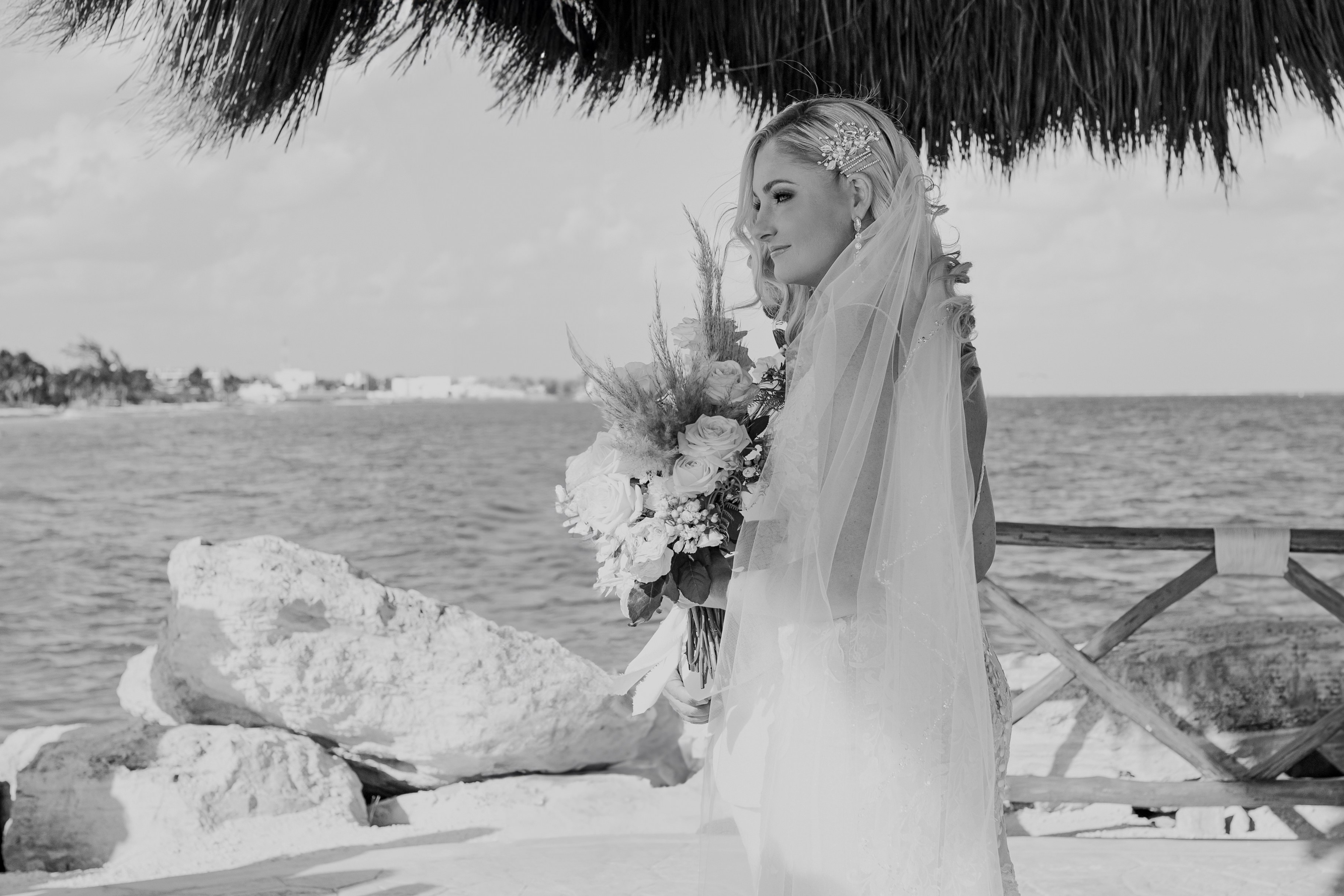
Yes, and with full legal backing: Quintana Roo recognized marriage equality in 2012 and Mexico legalized same-sex marriage federally in October 2022. Civil-ceremony requirements are identical for all couples, including the local blood test within 15 days of the ceremony. Pricing follows the same published 2026 rate card, with no surcharge for any couple.
In October 2022, Mexico became one of the largest countries in the world to legalize same-sex marriage at the federal level. Cancún and the Riviera Maya were already there long before, Quintana Roo recognized marriage equality in 2012, and the corridor has since become one of Latin America's most welcoming destinations for LGBTQ+ couples planning a wedding in paradise. This guide is for the two grooms, two brides, and non-binary couples now choosing where in the world to say "we do."
Why Cancún Is Increasingly Popular for LGBTQ+ Destination Weddings
For couples flying in from the United States, Canada, or Europe, the Mexican Caribbean offers a rare combination: legal recognition, cultural openness, world-class infrastructure, and a coastline that does most of the visual storytelling on its own. Cancún International Airport is the second busiest in Mexico, with direct flights from more than 100 cities. Once on the ground, the entire wedding-friendly corridor, from Costa Mujeres in the north to Tulum in the south, is reachable inside two hours.
The local hospitality industry has spent more than a decade building genuine competence around luxury destination weddings for international couples, and a substantial share of that experience is with LGBTQ+ celebrations. Most of the major resort brands you would consider for a wedding here have hosted dozens of same-sex ceremonies. Their planners know how to draft a ceremony script without gendered defaults. Their florists know that two boutonnieres or two bridal bouquets is often the right call. Their food and beverage teams know how to seat two sets of in-laws when the dynamic is delicate.
Cancún and the Riviera Maya are also genuinely safe. Quintana Roo passed marriage equality before most U.S. states. Public displays of affection between same-sex partners in resort and tourist zones are unremarkable. None of this is to say Mexico is uniformly progressive everywhere, but in the wedding corridor, you are very far from the parts of the country where attitudes lag.
What this means for the day itself is something quietly powerful: the celebration is allowed to be about you, not about the politics of your existence.
Legal Requirements for Same-Sex Marriage in Mexico
If you are planning a legally binding civil ceremony in Mexico (rather than a symbolic ceremony with the legal paperwork done back home), the requirements are identical for same-sex and opposite-sex couples. Here is what most municipalities in Quintana Roo will ask for, current as of 2026:
Documents
Both partners need a valid passport, plus an apostilled birth certificate translated into Spanish by a Mexican-certified translator (perito traductor). If either partner has been previously married, an apostilled divorce decree or death certificate is required as well. All foreign documents must carry an apostille from the issuing country's competent authority.
Witnesses
Four adult witnesses are required, each presenting a valid government photo ID. Witnesses do not need to be Mexican citizens or residents, friends or family flying in for the wedding are perfectly acceptable.
Residency window
Both partners must register their stay in the state of Quintana Roo for a minimum of three to five working days before the civil ceremony. This is not a tourism residency in the legal sense, it simply means you must be physically present in the state during this window. In practice, most international couples arrive a full week before the wedding and combine the residency requirement with last-minute planning, rehearsal, and welcome events.
Blood test
Mexico still requires a basic prenuptial blood test, administered locally at an approved lab in Mexico, typically within 15 days of the ceremony. Your wedding planner coordinates this.
Civil registry appearance
The actual marriage is performed by a civil registry officer (Juez del Registro Civil). Many couples have the officer travel to the resort or venue. Others choose to handle the legal portion at the registry office and reserve the symbolic ceremony for the beach.
Because requirements occasionally shift and details vary by municipality, do not attempt the legal civil paperwork without a local wedding planner. Most international LGBTQ+ couples choose one of two paths: (a) handle the legal marriage in their home country and host a symbolic ceremony in Mexico, or (b) complete the full legal civil ceremony in Mexico and treat it as the only marriage. Both paths are equally valid, and either can be photographed with the same depth of editorial coverage.
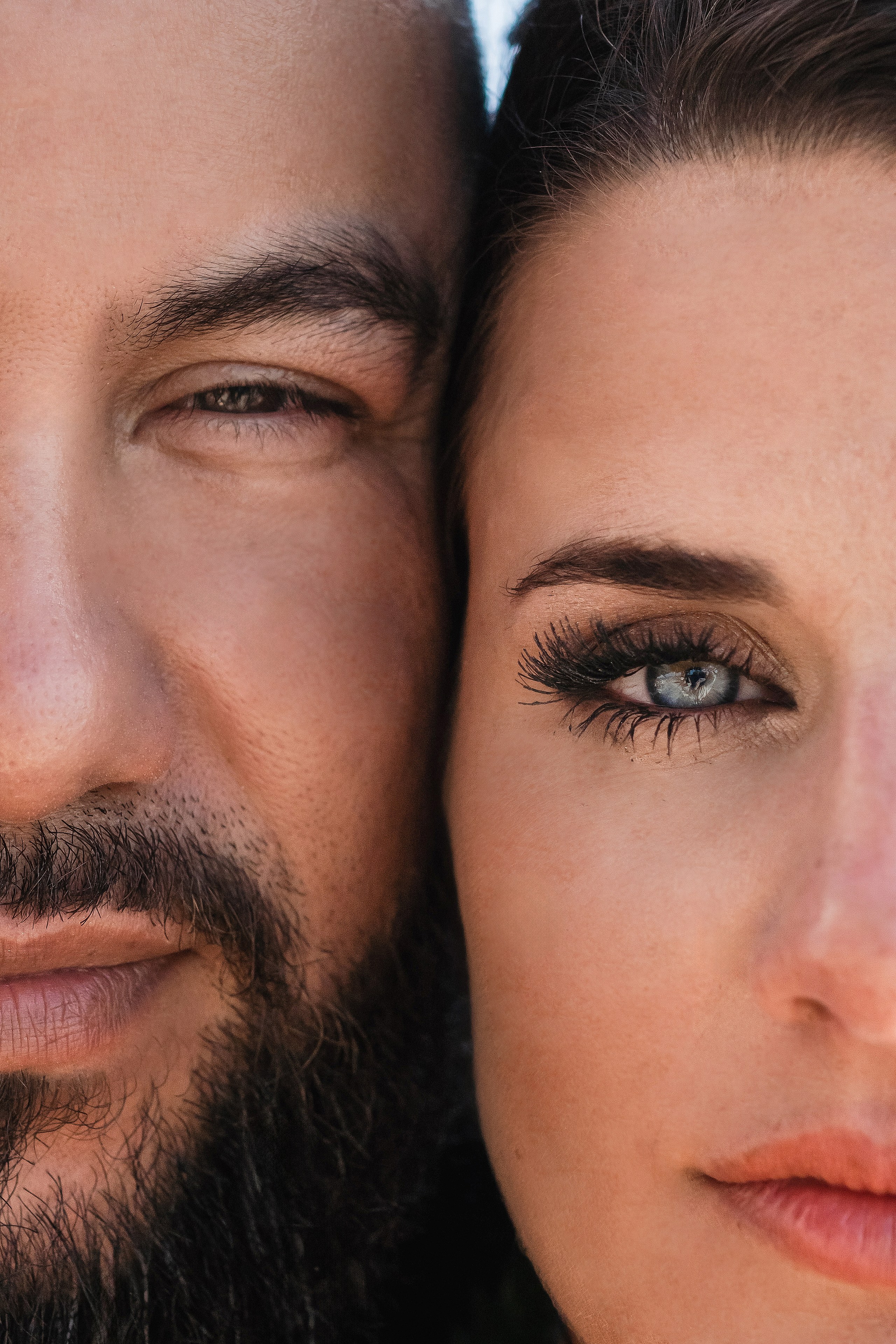
Best LGBTQ+-Friendly Resorts in Cancún & Riviera Maya
Most luxury resorts in this corridor will host a same-sex wedding without hesitation. The ones below are the properties we have worked with most often for LGBTQ+ couples, where the planning teams are experienced, the staff is well-trained, and the wedding product is consistent regardless of who is marrying whom.
Le Blanc Spa Resort Cancún
Adults-only, all-inclusive, on the quieter southern end of the Hotel Zone. Le Blanc's wedding department is small, attentive, and has hosted multiple same-sex ceremonies. Beach gazebo and sky terrace ceremonies both photograph beautifully.
Hyatt Ziva Cancún
Family-friendly all-inclusive on a peninsula that gives the property unusual privacy. Wedding teams are trained on inclusive language and accommodate ceremony scripts written by the couple. Strong sunset views from the rooftop and the main beach.
Hard Rock Hotel Riviera Maya
Large adults-only and family sections, both of which can host weddings. Hard Rock has been one of the most visible all-inclusive brands actively marketing to LGBTQ+ couples in Mexico. Multiple ceremony locations from beachfront to garden.
Hotel Xcaret México
The most distinctly Mexican luxury resort in the region, built into a former eco-park, with cenotes, jungle paths, and ocean access. Hotel Xcaret hosts intimate ceremonies in environments you cannot replicate elsewhere. The planning team takes pride in custom, deeply personalized celebrations.
Rosewood Mayakoba
One of the most refined luxury properties in Latin America. Lagoon-front suites, butler service, and wedding venues that range from a private chapel to overwater pavilions. Quiet, discreet, and effortlessly inclusive. A repeat host for high-budget LGBTQ+ weddings.
Andaz Mayakoba
Hyatt's design-forward sister property in Mayakoba, smaller and more contemporary than Rosewood, with the same access to the canals, the championship golf course, and the private beach. Andaz weddings tend to feel modern, intimate, and unfussy.
Banyan Tree Mayakoba
Asian-inspired villa resort, every accommodation a freestanding villa with a private pool. Banyan Tree's wedding team is exceptionally polished and handles small, high-touch ceremonies with thoughtful sensitivity to the couple's specific dynamic.
Fairmont Mayakoba
The largest of the Mayakoba properties, with multiple beachfront and garden ceremony locations. Fairmont's wedding team has hosted several same-sex weddings each year and is comfortable adapting any traditional ceremony element to fit the couple's vision.
This is a working list, not an exhaustive one. Other strong options include the Waldorf Astoria Cancún, the Ritz-Carlton Cancún, Nizuc Resort & Spa, Conrad Tulum, and the Atelier Playa Mujeres property family. The right fit depends on your destination wedding aesthetic, guest count, and budget, not on whether the property "accepts" same-sex couples. Almost all of these do, and have for years.
Our Photography Approach for Same-Sex Couples
Most wedding photography is built on a long history of heteronormative defaults that nobody ever wrote down. The bride walks down the aisle. The groom waits at the altar. The first look is framed from his perspective. The dancing partner positions assume one leader and one follower. The family portrait sequence assumes one bride's family and one groom's family. None of this is malicious, it is simply inherited muscle memory from generations of weddings that all looked roughly the same.
For a same-sex wedding, those defaults do not apply, and pretending they still do is what produces photos that quietly look "off." Our approach starts in the pre-wedding consultation, where we walk through the whole day asking simple questions:
- Does either of you want to walk down an aisle? Both? Neither? Together?
- Will there be a first look, and if so, who initiates it, and what should the framing convey?
- Whose family is being photographed first, or are family portraits done at the same time as a single combined unit?
- For dance instruction and pose direction, who naturally leads, who naturally follows, or do you alternate?
- Are there any ceremony elements that need adapting because they assume two specific gender roles?
The answers shape the shot list, the timeline, and the way our team communicates on the day. When direction is needed during portraits, we use neutral cues: "Step toward each other," "Lean in slightly," "Whisper something only they get to hear." We never assign a default leader, a default protector, or a default romantic role. The couple's natural dynamic shows up on its own, and our job is to capture it cleanly without forcing it into a template.
The technical and editorial standards stay identical to every other wedding we shoot. The same lenses. The same color grade. The same coverage windows. The same delivery timeline. What changes is only the layer of unspoken assumptions, and removing those assumptions is what makes the difference between a same-sex wedding that looks like a real wedding and one that looks like a heterosexual wedding with two grooms or two brides Photoshopped into it.
Real Coverage: Two Grooms, Two Brides, Non-Binary Couples
Two grooms
For two-groom weddings, the symmetry of suiting opens up creative possibilities that mixed-gender weddings rarely have. Coordinated but not identical suits, one in navy, one in cream; one in classic black, one in burgundy, photograph beautifully against the Caribbean palette. Boutonnieres can match or contrast. Both partners traditionally walk down the aisle escorted by parents, or sometimes by each other. Pre-ceremony portraits often happen in parallel: each groom photographed separately with his side of the family, then together for the first look.
Two brides
Two-bride weddings tend to be the most visually flexible of all, because two gowns in coordinated palettes (champagne and ivory, blush and white, two distinct silhouettes in the same color family) photograph stunningly. Some couples want both partners in formal gowns; others want one in a gown and one in a tailored suit; others choose two suits or two jumpsuits. There is no correct path. The first-look framing is often particularly emotional in two-bride weddings, because the symmetry of two veiled or two unveiled brides walking toward each other creates a frame that simply does not exist in any other type of ceremony.
Non-binary couples
For non-binary couples, the most important element is the pre-wedding conversation about pronouns, language, and visual presentation. We ask: What pronouns should the team use throughout the day? What words do you want in the ceremony script, "spouse," "partner," "two souls," or something specific you have written together? What visual presentation do you want for portraits, formal, casual, mixed, asymmetric? The answers vary widely, and we adapt accordingly. Non-binary weddings have produced some of the most beautifully personal coverage we have ever delivered, precisely because nothing was assumed and everything was chosen.
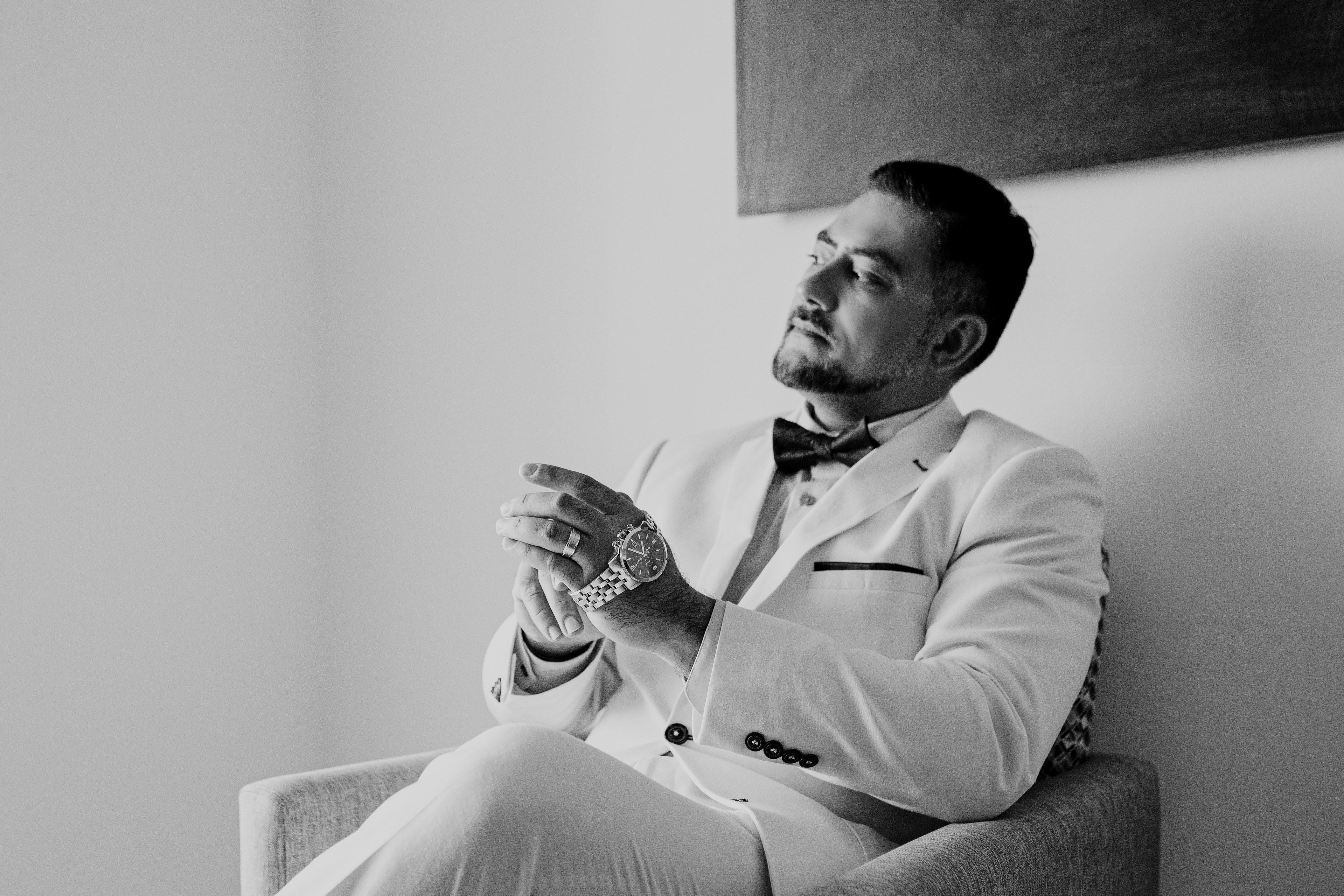
Family Dynamics & Sensitive Situations
This is the part of LGBTQ+ wedding planning that other guides usually skip, and it is the part that most shapes the experience on the day. Not every couple arrives at their wedding with full family support. Some couples are estranged from one or both sets of parents. Some are partly out, partly not. Some have siblings or extended family who are warm and welcoming, and others who chose not to come at all. Some have parents who are physically present but politically tense.
Our approach is private, careful, and always led by the couple. In the pre-wedding consultation, we ask directly: Is there anyone we should know about in advance? Anyone whose presence is delicate? Anyone who is not coming, or who is coming with conditions? We do not need details, we only need the structure of the situation, so we can plan around it.
On the day, this translates into very specific small choices. We might propose a more compressed family-portrait window, or no formal group portraits at all if that is what the couple wants. We might flag a specific moment to leave alone, a parent who showed up but is uncomfortable, a sibling who declined to be photographed. We hold space for tears that are not happy tears, and we do not photograph those moments without explicit permission. We never push group photos that would create discomfort, and we never ask intrusive questions about absent family members.
The wedding belongs to the couple. Family members who chose to come are guests. Family members who chose not to come are not part of the day's story, and they will not appear in the gallery. Our team takes this responsibility seriously, because for many LGBTQ+ couples, the wedding is the first event in their lives where their full identity has been celebrated publicly. We treat that gravity with the care it deserves.
Vendor Network in Cancún: Affirming Planners, Officiants, Florists
Photography is one piece of a larger team. Over the years we have built and maintained a network of vendors in Cancún, the Riviera Maya, and Tulum who consistently deliver excellent service to LGBTQ+ couples. We share recommendations during the planning phase based on your specific needs, location, and aesthetic. Categories include:
- Wedding planners, bilingual, full-service planners with extensive same-sex wedding portfolios in Quintana Roo.
- Civil registry officers, judges who travel to resorts and have performed dozens of same-sex civil ceremonies under Quintana Roo law.
- Symbolic officiants, non-religious and spiritual officiants comfortable writing custom ceremony scripts for any couple configuration.
- Florists, local studios that understand two-bouquet, two-boutonniere, and asymmetric installations without needing to be educated on the brief.
- Hair and makeup artists, bilingual MUAs experienced with brides, grooms, and non-binary clients, with on-site mobile setups for resort weddings.
- Videographers and second photographers, vetted collaborators whose editorial language matches ours and who share the same approach to inclusive coverage.
We do not take referral fees from any of these vendors. Recommendations are based on consistent quality, not on commercial relationships.
Pricing: Same as Any Wedding
This section exists because the question gets asked privately more often than couples might expect. The answer is straightforward: pricing is identical for same-sex weddings, no surcharge, no discount, no separate package. Coverage is priced by hours, deliverables, and team size. The fact that a couple is LGBTQ+ has no bearing on cost or scope.
For specific numbers, see the published 2026 wedding photography pricing breakdown for Cancún. The same package tiers, the same hourly rates, and the same album upgrades apply. Discounts, when offered, are tied to off-season dates or weekday weddings, never to the identity of the couple.
Statement of Inclusion & Safe-Space Commitment
We do not put a rainbow logo on our website during Pride month and take it down in July. We do not market ourselves as "LGBTQ+ friendly" as a category and then deliver heteronormative coverage when the camera goes up. We do not collect testimonials from same-sex couples to use in marketing campaigns aimed at the same-sex couples we have not yet booked.
What we do is much simpler. We photograph weddings. The couple's identity, configuration, and family situation shape the day, the script, and the visual approach, exactly as they would shape the day for any couple. The technical and editorial standards stay identical. The pricing stays identical. The respect stays identical.
If you are an LGBTQ+ couple researching destination wedding photographers in Mexico and you have been on enough vendor websites to recognize performative inclusion when you see it, what you are looking for here is the absence of performance. We will treat your wedding as a wedding. We will treat you as the couple at the center of it. And we will deliver coverage you can hand down to your children, your nieces, your nephews, and your grandchildren without any caveats, footnotes, or unspoken qualifiers.